
Avaya 1416 User Manual: A Comprehensive Guide
This manual details the Avaya 1416 telephone, specifically when connected to Integral 5 systems, referencing guide 16-603588 from May 2010.
The Avaya 1416 is a versatile digital desk phone designed for efficient communication within business environments. This guide provides comprehensive instructions for users of the Avaya 1416, particularly those integrated with the Integral 5 communication system. As detailed in Avaya document 16-603588, issued in May 2010, the phone offers a robust set of features to enhance productivity.
This manual caters to users in both Great Britain (en-GB) and the United States (en-US), supporting Microsoft Hazel and David desktop environments. It aims to simplify operation, covering everything from basic call functions to advanced features like call transferring and voicemail management. Understanding the Avaya 1416’s capabilities will empower you to leverage its full potential for seamless communication.
Understanding the Phone Layout
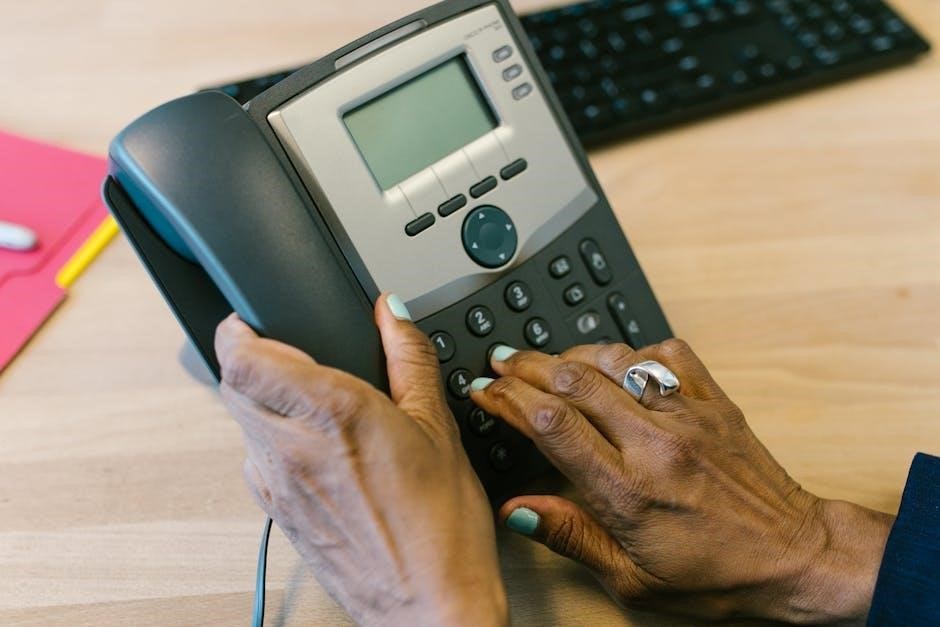
The Avaya 1416 features a standard telephone layout optimized for user accessibility. The keypad includes numeric buttons for dialing, along with dedicated keys for common functions like redial, speakerphone, and headset. A visual display screen provides call information, menu options, and system messages. Navigation is primarily achieved through directional keys and a central select button.
Line and feature keys are customizable, allowing users to quickly access frequently used functions. The handset cradle is centrally located, and volume control buttons are easily reachable. Referencing documentation like Avaya’s 16-603588 (May 2010) will help identify each component. Familiarizing yourself with this layout is crucial for efficient operation within the Integral 5 environment, supporting both en-GB and en-US configurations.
Key Features and Capabilities
The Avaya 1416 telephone, when integrated with Integral 5, offers a robust set of communication features. Core capabilities include high-quality voice communication, efficient call handling, and streamlined access to voicemail. Users benefit from features like call waiting, call forwarding, and three-way conferencing. The phone supports both speakerphone and headset operation for versatile communication options.

Customization is a key strength, allowing users to program speed dial numbers and personalize feature key assignments. Compatibility with Microsoft Hazel and David desktops (en-GB/en-US) enhances the user experience. As detailed in guide 16-603588 (May 2010), the Avaya 1416 delivers reliable performance and a comprehensive feature set for modern business communication needs.
Navigating the Menu System
The Avaya 1416’s menu system, accessed via dedicated feature keys, allows users to configure personalized settings and access advanced functionalities. While specific menu structures depend on the Integral 5 system configuration, common options include call forwarding, voicemail access, and speed dial programming. The display guides users through each menu level, presenting clear options for selection.
Navigating is typically achieved using the directional keys and the ‘Select’ or ‘OK’ button. Referencing documentation like guide 16-603588 (May 2010) is crucial for understanding system-specific menu layouts. Users can efficiently tailor their phone’s behavior to match their individual communication preferences, enhancing productivity and ease of use.
Making and Receiving Calls
The Avaya 1416 facilitates both initiating and accepting calls with ease. To place a call, simply lift the handset or use the speakerphone and dial the desired number. The phone supports various dialing methods, including direct dialing and speed dial access, configured through the menu system. Incoming calls are indicated by a visual alert on the display and a ringing tone.
Answering a call is done by lifting the handset or pressing the answer key. The Integral 5 integration ensures seamless call routing and features. Refer to documentation, such as guide 16-603588 (May 2010), for specific call handling options available within your system configuration. Efficient call management is central to the Avaya 1416 experience.
Call Handling Features

The Avaya 1416, when integrated with Integral 5, offers a robust suite of call handling capabilities. These features enhance communication efficiency and control. Users can leverage functions like holding calls to attend to other matters, transferring calls to colleagues or departments, and initiating conference calls to collaborate with multiple parties simultaneously.
These functionalities are typically accessed via dedicated keys on the phone or through the menu system. Guide 16-603588 (May 2010) provides detailed instructions on utilizing these features within the Integral 5 environment. Mastering these call handling tools is crucial for maximizing productivity and ensuring effective communication within your organization.
Holding and Retrieving Calls
Placing a call on hold with the Avaya 1416, connected to Integral 5, is straightforward. Typically, a dedicated ‘Hold’ button initiates this function, momentarily pausing the call while maintaining the connection. The user can then attend to other tasks without disconnecting the caller. Retrieving a held call is equally simple, often achieved by pressing the same ‘Hold’ button again, or a designated ‘Recall’ key.
Refer to guide 16-603588 (May 2010) for specific key mappings, as configurations can vary. Understanding these procedures ensures seamless call management and prevents callers from experiencing extended silences. Proper use of hold and retrieve functions contributes to a professional and efficient communication experience.
Transferring Calls
The Avaya 1416, when integrated with Integral 5, offers a streamlined call transfer process. Initiating a transfer usually involves pressing a ‘Transfer’ button, followed by dialing the extension number of the intended recipient. The system may then provide an audible confirmation or a visual cue indicating the transfer is in progress.

Guide 16-603588 (May 2010) details specific transfer methods, including ‘warm’ transfers (announcing the caller) and ‘blind’ transfers (transferring without announcement). Mastering these techniques is crucial for efficient call routing within an organization. Ensure the recipient is available before completing the transfer to avoid dropped calls or unnecessary delays. Proper transfer etiquette enhances communication flow.
Conference Calling
The Avaya 1416, coupled with the Integral 5 system, facilitates efficient conference calling. Typically, initiating a conference requires establishing a call with the first party, then placing that call on hold. Subsequently, dial the extension of the second participant. Once connected, a ‘Conference’ or ‘Join’ button is pressed, merging all parties into a single call.
User guide 16-603588 (May 2010) outlines specific procedures for adding multiple participants, potentially utilizing dedicated conference call features within Integral 5. Managing a conference effectively involves muting participants when not speaking to minimize background noise and ensuring clear communication for all involved. Understanding these features boosts collaborative productivity.
Voicemail Access and Management
Accessing voicemail on the Avaya 1416, when integrated with Integral 5, generally involves pressing a dedicated voicemail key on the phone. This key often displays a cassette icon or similar indicator. The system will then prompt for your voicemail password, if one is set. User guide 16-603588 (May 2010) details specific access codes and procedures.
Voicemail management includes listening to messages, deleting them, and saving important ones. Integral 5 typically offers options for message notification, such as a flashing voicemail indicator on the phone. Familiarizing yourself with these features ensures you don’t miss critical communications. Proper voicemail management keeps your inbox organized and efficient.
Using the Speakerphone and Headset
The Avaya 1416 offers both speakerphone and headset capabilities for versatile communication. Activating the speakerphone is typically achieved by pressing a dedicated speakerphone button on the phone’s interface, allowing hands-free conversations. Adjust the volume to a comfortable level for clear audio. When using a headset, connect it to the designated headset port on the phone.
Ensure the headset is compatible with the Avaya 1416 for optimal performance. The phone automatically detects the headset connection and routes audio accordingly. Utilizing a headset provides increased privacy and comfort during longer calls. Refer to user guide 16-603588 (May 2010) for specific headset compatibility details and troubleshooting tips.
Adjusting Volume and Ringer Settings
The Avaya 1416 allows users to customize both the call volume and the ringer volume to suit their preferences and environment. Volume control is typically managed via dedicated up and down buttons on the phone’s faceplate, enabling adjustments during active calls. Ringer volume settings can be accessed through the phone’s menu system, allowing selection from various levels or even a silent mode.

Refer to user guide 16-603588 (May 2010) for detailed instructions on navigating the menu to modify ringer settings. Proper adjustment ensures you don’t miss important calls while maintaining a comfortable listening experience. Consider the surrounding noise levels when setting volume levels for optimal clarity.
Programming Speed Dial Numbers
The Avaya 1416 phone facilitates quick dialing of frequently contacted numbers through programmable speed dial buttons. Users can assign numbers to these buttons, streamlining the call initiation process. Accessing the speed dial programming function is typically done through the phone’s menu system, as detailed in user guide 16-603588, issued in May 2010.
The process generally involves entering the desired phone number and then selecting an available speed dial button to associate with that number. Remember to consult the manual for specific key sequences and menu options. Properly programmed speed dial numbers significantly enhance user efficiency and reduce call setup time, improving overall communication workflows.
Understanding Feature Codes

Avaya 1416 phones utilize feature codes – short numeric sequences – to access advanced call handling and system functionalities. These codes initiate specific actions, such as call forwarding, do not disturb, or accessing voicemail. The availability and specific codes vary depending on the system administrator’s configuration and the Integral 5 setup, as referenced in user guide 16-603588 from May 2010.
Users should obtain a comprehensive list of feature codes from their IT department or system administrator. Incorrectly entered codes may result in unintended consequences or service disruptions. Familiarizing yourself with these codes empowers you to efficiently manage calls and leverage the full capabilities of your Avaya 1416 phone system.
Troubleshooting Common Issues
Encountering issues with your Avaya 1416 phone is common. This section addresses frequently reported problems. If you experience a No Dial Tone, verify the phone cable connection to both the phone and the wall jack. Poor Audio Quality can stem from a weak network connection or issues with the headset; try a different headset or port. Display Problems might require a phone reset, but first, check the brightness settings.
Refer to user guide 16-603588 (May 2010) for detailed troubleshooting steps. If problems persist, contact your IT support team. Documenting the issue and any error messages will expedite the resolution process, ensuring minimal disruption to your communication.
No Dial Tone
A complete lack of dial tone on your Avaya 1416 phone indicates a connectivity issue. First, carefully inspect the telephone cable connecting the phone to the wall jack, ensuring it’s securely plugged in at both ends. Try a different, known-working phone cable to rule out a faulty cable. If the problem persists, verify that the wall jack itself is active by testing with another device.
Consult user guide 16-603588 (May 2010) for specific Integral 5 system checks. A system outage or port deactivation could also cause this. Contact your IT administrator to confirm network status and port configuration. A power cycle of the phone might also resolve temporary glitches.
Poor Audio Quality
Experiencing static, distortion, or low volume on your Avaya 1416? Begin by checking the handset or headset connection, ensuring it’s firmly seated. Adjust the volume control – both the ringer and the handset/headset volume – to optimal levels. Interference from nearby electronic devices can sometimes degrade audio quality; try moving the phone away from potential sources.
Refer to Avaya documentation (guide 16-603588, May 2010) regarding Integral 5 settings that might impact audio. Network congestion can also contribute to poor sound. If using a headset, verify its functionality with another device. If the issue persists, contact your IT support team to investigate potential network or system-related problems.
Display Problems
If your Avaya 1416 phone’s display is blank, flickering, or showing distorted characters, first try restarting the phone. Disconnect the power cable, wait approximately ten seconds, and reconnect it. Ensure the display brightness is appropriately adjusted using the phone’s menu settings. Check the cable connecting the phone to the network; a loose connection can cause display issues.
Consult Avaya’s Integral 5 documentation (guide 16-603588, May 2010) for potential display configuration options. Software glitches can sometimes cause display errors; a phone reset might resolve these. If the problem continues, document the specific error message (if any) and contact your IT administrator for further assistance, as it could indicate a hardware malfunction.

Resetting the Avaya 1416 Phone
Resetting your Avaya 1416 phone can resolve minor software glitches and restore it to its default settings. A simple restart involves disconnecting the power cable, waiting ten seconds, and reconnecting it – this often resolves temporary issues. For a factory reset, access the phone’s menu system (refer to the ‘Navigating the Menu System’ section). Locate the ‘Reset’ or ‘Factory Defaults’ option.
Caution: A factory reset will erase all personalized settings, including speed dial numbers and custom ringtones. Before proceeding, document these settings. The Integral 5 user guide (16-603588, May 2010) may contain specific reset instructions for your system configuration. If issues persist after a reset, contact your IT support team.
Avaya 1416 and Integral 5 Compatibility
The Avaya 1416 telephone is specifically designed for seamless integration with the Integral 5 communication system. This compatibility ensures full functionality of all core features, including call handling, voicemail access, and speed dial capabilities. User guide 16-603588, issued in May 2010, details the specific configuration parameters required for optimal performance within an Integral 5 environment.
Proper configuration, often managed by your IT administrator, is crucial. This includes provisioning the phone with the correct extension number and feature codes. Variations in system setup may require adjustments to ensure all features operate as expected. Refer to your system administrator for any advanced configuration needs or troubleshooting related to Integral 5 compatibility.

Resources and Further Support
For additional assistance beyond this user manual, several resources are available to support your Avaya 1416 phone experience. The official Avaya support website provides a comprehensive knowledge base, frequently asked questions, and downloadable documentation. Your organization’s IT department is the primary point of contact for internal support and troubleshooting specific to your Integral 5 system configuration.
Referencing user guide 16-603588 (May 2010) can provide further clarification on specific features and settings. Online forums and communities dedicated to Avaya products can also offer peer-to-peer support and solutions to common issues. Remember to have your phone’s extension number and system details readily available when seeking assistance from any support channel.